- Type
- Classical dance, solo
- Traditionally performed by
- Women
- Music
- Carnatic, often in Manipravalam
- Main mood
- Sringara (love and devotion)
The legend behind the name
In Hindu stories, Vishnu became Mohini to draw the nectar of immortality away from the asuras after the churning of the ocean, and again to trick the demon Bhasmasura into destroying himself. The dance takes its mood from that charm and grace. Scholars connect its gentle style with the kaisiki vritti described in the Natya Shastra.
Style and expression
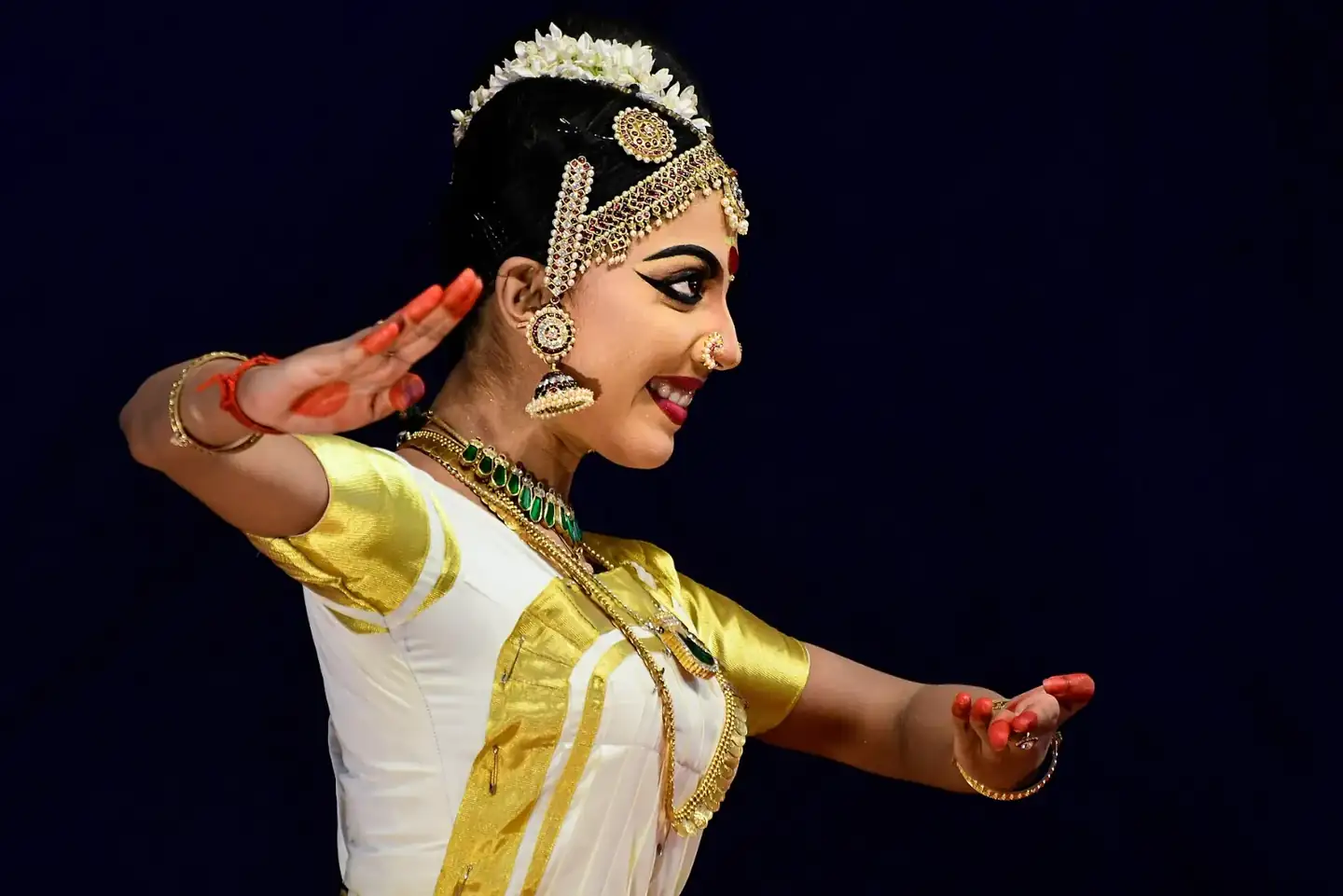
Mohiniyattam belongs to the lasya side of Indian dance: feminine, flowing and restrained rather than vigorous. The body sways gently from side to side, like palms in the breeze, with light footwork and soft hand gestures. The main mood is sringara, love and devotion, usually directed towards Vishnu or Krishna, and the dancer uses abhinaya, expressive acting, to tell the story.
Costume and music
Dancers wear a white or cream sari with gold borders, in the style of Kerala's traditional kasavu, and tie their hair in a bun on the left side of the head, wrapped with jasmine.
The music is Carnatic, and many songs are in Manipravalam, a mix of Malayalam and Sanskrit. A mridangam and violin are common accompaniments, and the tempo is kept slow so that every expression can be seen.
Revival and today
The dance declined in the colonial period but was revived in the twentieth century, notably at Kerala Kalamandalam, which the poet Vallathol helped found. Today it is taught across India and performed on stages around the world.
Where to see it
Short performances are staged regularly at cultural centres in Kochi and Thiruvananthapuram, and at temple and cultural festivals across Kerala. Kerala Kalamandalam at Cheruthuruthy, near Thrissur, lets visitors watch training sessions. We can include a performance in a Kerala itinerary.
Plan it with us
Tell us your dates and who is travelling. We will build the route, book the car, driver and hotels, and send you a clear quote.