- Season
- February to April
- Deity
- Bhadrakali
- Region
- Central Kerala
- Drums
- Thappu and chenda
The name and meaning
The word combines the Malayalam words pada, meaning army, and ani, meaning row, so Padayani means a line of warriors. The name points to the art's roots in martial traditions as well as temple worship. Communities perform it to seek the goddess's protection and blessings for health and prosperity.
The kolams
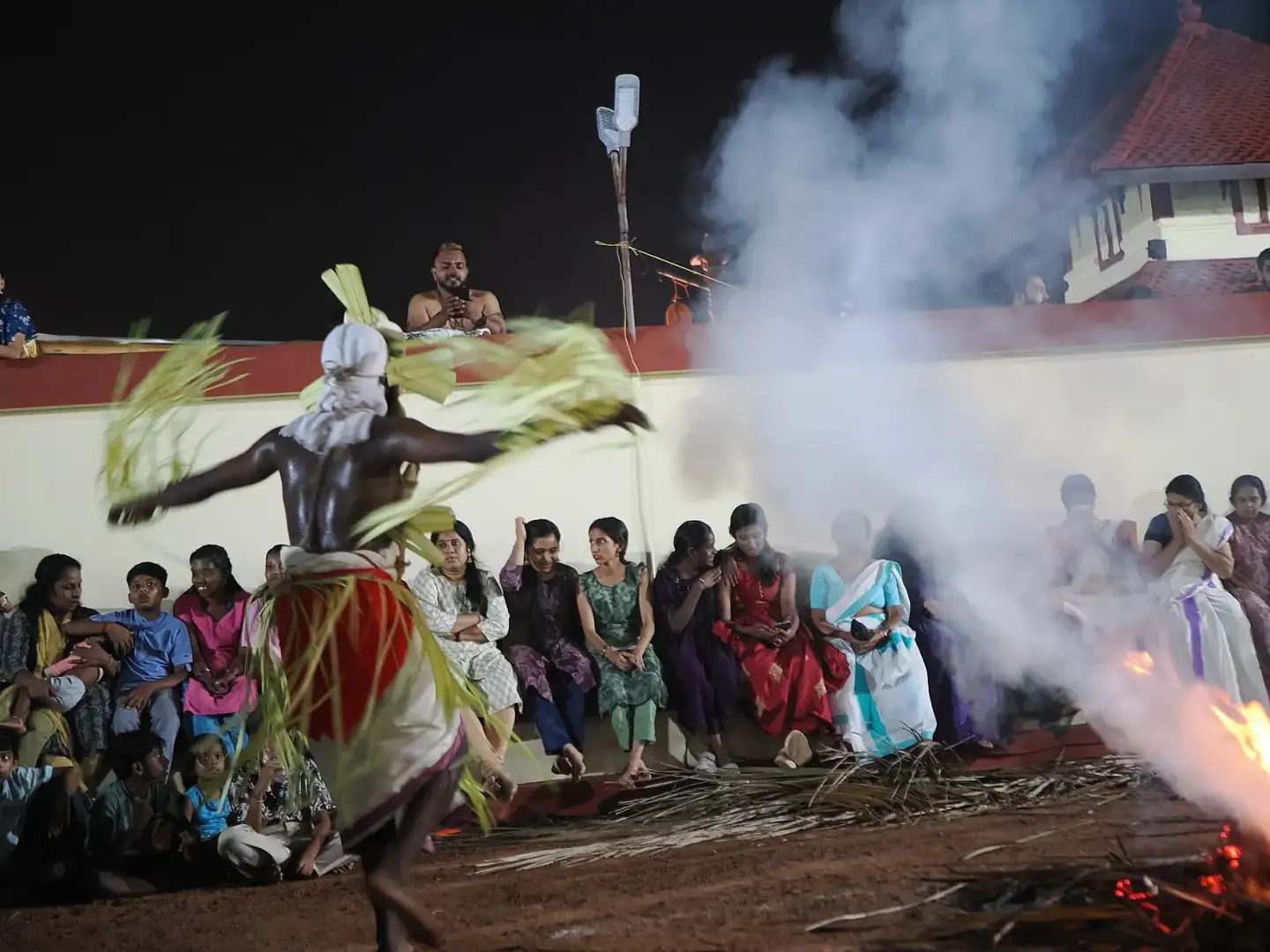
The most striking part of Padayani is the kolam, the huge mask or headgear worn by each performer. Kolams are cut from the sheaths of areca palms and painted with natural colours, mainly red, yellow, green and black. Every mask represents a character: fierce forms of the goddess, spirits, birds or comic figures. The Bhairavi or Bhadrakali kolam is the most dramatic, and some masks are so large that performers seem to grow to twice their size.
Music, dance and story
Performers move with energetic steps to the beat of the chenda and thappu drums. Singers perform the kolappattu, songs belonging to each kolam, many of which describe how Bhadrakali defeated the demon Darika. The combination of drumming, song and firelight builds to an intense climax through the night.
When and where to see it
Padayani is part of the temple festival season, generally between February and April. It is performed in temple courtyards in parts of Alappuzha, Kottayam, Kollam and especially Pathanamthitta district, usually after dark and in the open air.
Making the masks, running the festival and dancing involve much of the village, so each Padayani is a shared community effort. Ask locally for dates, as each temple follows its own calendar. We can help time a central Kerala trip to include a performance.
Also nearby
Plan it with us
Tell us your dates and who is travelling. We will build the route, book the car, driver and hotels, and send you a clear quote.