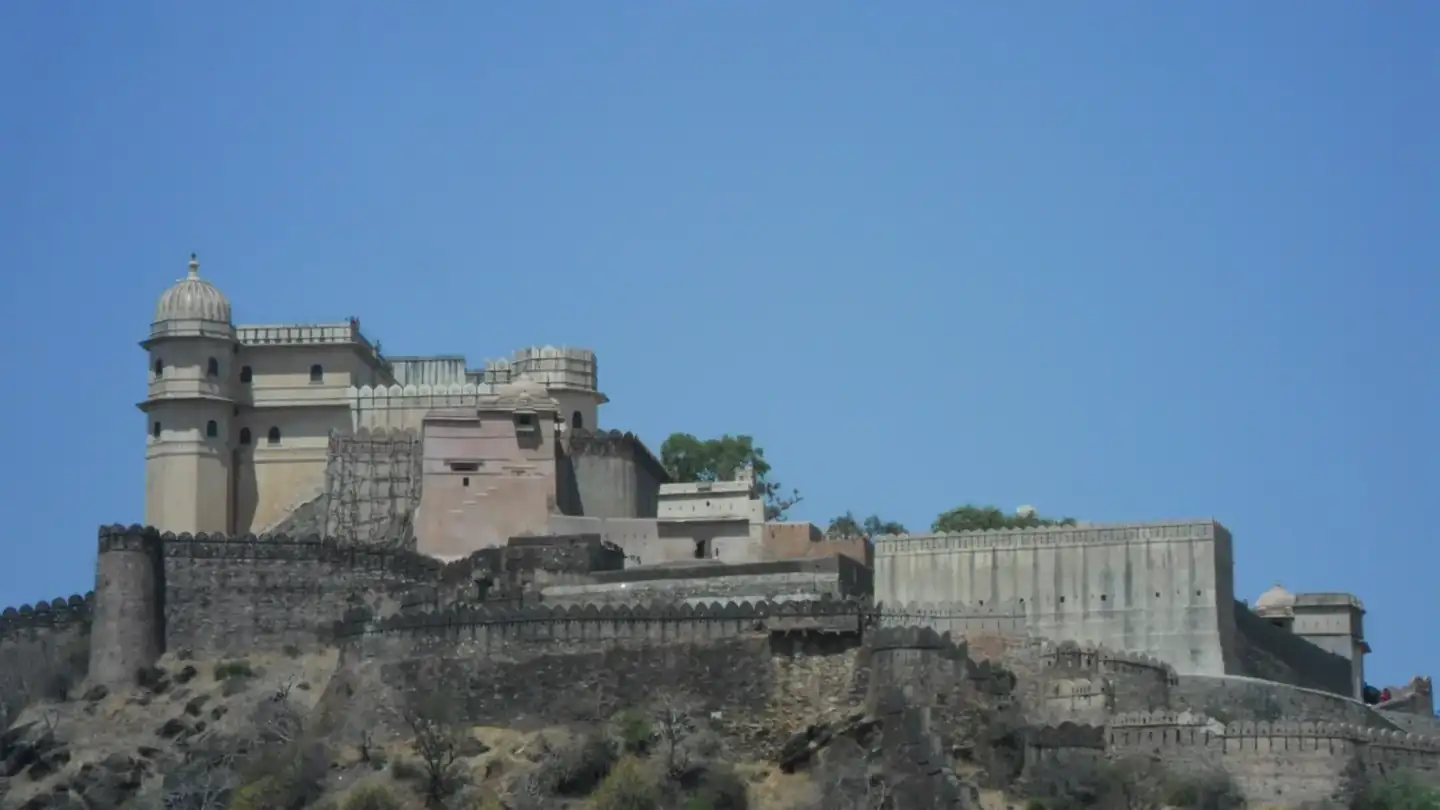
- Built
- 15th century, under Rana Kumbha
- Wall length
- About 36 km
- Heritage status
- UNESCO World Heritage Site (Hill Forts of Rajasthan)
- Best time
- September to March
- Ideal time needed
- 6 to 8 hours
History
The fort was raised as a stronghold of the Mewar rulers, placed on a ridge that made it very hard to attack. Its ramparts are broad enough in places for several horses to ride side by side. Inscriptions within the fort record how it was built. Maharana Pratap, the Mewar king remembered for his long resistance to the Mughals, was born here in 1540.
What to see
The temples reflect the patronage the rulers gave to both faiths, and many carry fine stone carving worth a slow look.
- The wall itself, which snakes over the hills and can be walked in sections
- Badal Mahal, the palace at the top, with wide views over the countryside
- The room traditionally shown as Maharana Pratap's birthplace
- Neelkanth Mahadev Temple, with its large Shiva lingam
- Hindu and Jain temples scattered inside the walls, said to number over 300
Wildlife sanctuary
The fort is ringed by the Kumbhalgarh Wildlife Sanctuary, a stretch of dry forest on the Aravalli slopes. A drive or guided walk here can be combined with the fort, and Rajsamand Lake is another easy stop in the area.
Best time and tips
September to March is the most comfortable period, as summer days are very hot on the exposed ramparts. The complex is large and hilly, so wear sturdy shoes and loose, comfortable clothing and carry water. To see the palace, temples and a good stretch of the wall, keep aside a full day of six to eight hours. We can arrange Kumbhalgarh as a day trip or overnight stop from Udaipur.
Also nearby
Plan it with us
Tell us your dates and who is travelling. We will build the route, book the car, driver and hotels, and send you a clear quote.