- Period
- Mid-seventh century (Pallava)
- Entry fee
- Free
- Size
- About 27 m wide and 13 m high
- Nearest airport
- Chennai International, about 55 km
- Nearest railway station
- Chengalpattu
What the relief shows
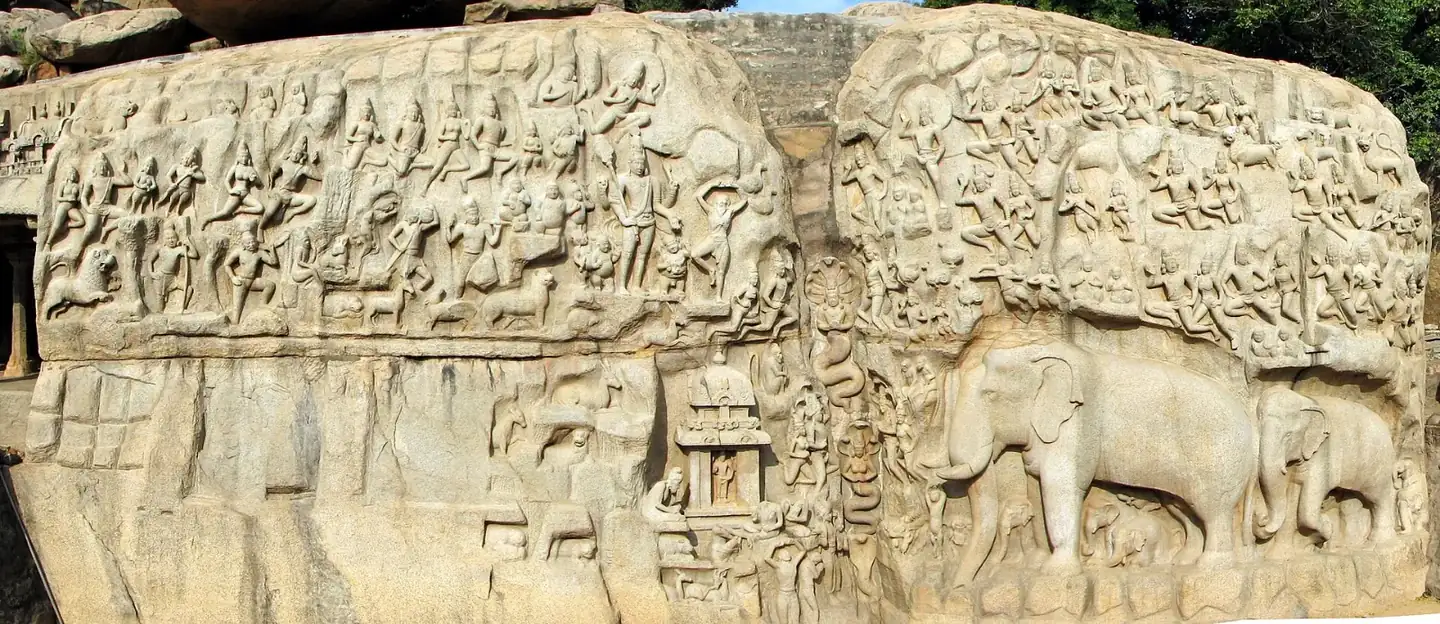
The carving is roughly 27 metres wide and 13 metres high. A natural cleft runs down the middle, and the sculptors used it as a river, with serpent deities rising in it. On one side, an ascetic stands on one leg with arms raised, usually read as Arjuna doing penance to win a weapon from Shiva; others see the scene as Bhagiratha bringing the Ganga down to earth, which is why it is also called the Descent of the Ganges.
Details to look for
- A life-size family of elephants, the largest figures on the rock
- The nagas and naginis swimming up the central cleft
- Flying celestial couples, sages, hunters and animals, over a hundred figures in all
- The cat standing like an ascetic, mocking a crowd of mice, a story from the fables
History
The relief was carved under the Pallava kings, whose sculptors turned Mahabalipuram's granite outcrops into shrines, caves and panels. Water may once have flowed down the cleft from a tank above, which would have brought the river scene to life.
Visiting information
The relief is in the open and free to view, and you can see it at any time of day, though early morning and late afternoon light shows the carving best. Nearby are the Shore Temple, the Five Rathas, Krishna's Butter Ball, the Mahishasuramardini Cave and the lighthouse, which together make a full day.
How to reach
Chennai International Airport is about 55 km away. Chengalpattu is the nearest railway station, and frequent buses run from Chennai along the East Coast Road.
Also nearby
Plan it with us
Tell us your dates and who is travelling. We will build the route, book the car, driver and hotels, and send you a clear quote.