- Main forms
- Bhavai, Chakri, Chari, drum dance, fire dance
- Where to watch
- Cultural shows in Udaipur, Jaipur and Jaisalmer; village fairs
- Best time
- October to March, and festival seasons
Bhavai
Associated with the Udaipur region, Bhavai is a test of balance. Dancers, men as well as women, move with a tall stack of earthen pots on their heads, often eight or nine high. The most skilled performers do this while standing on the rim of a brass plate or the edge of a sword, which never fails to draw gasps from the audience.
Chakri
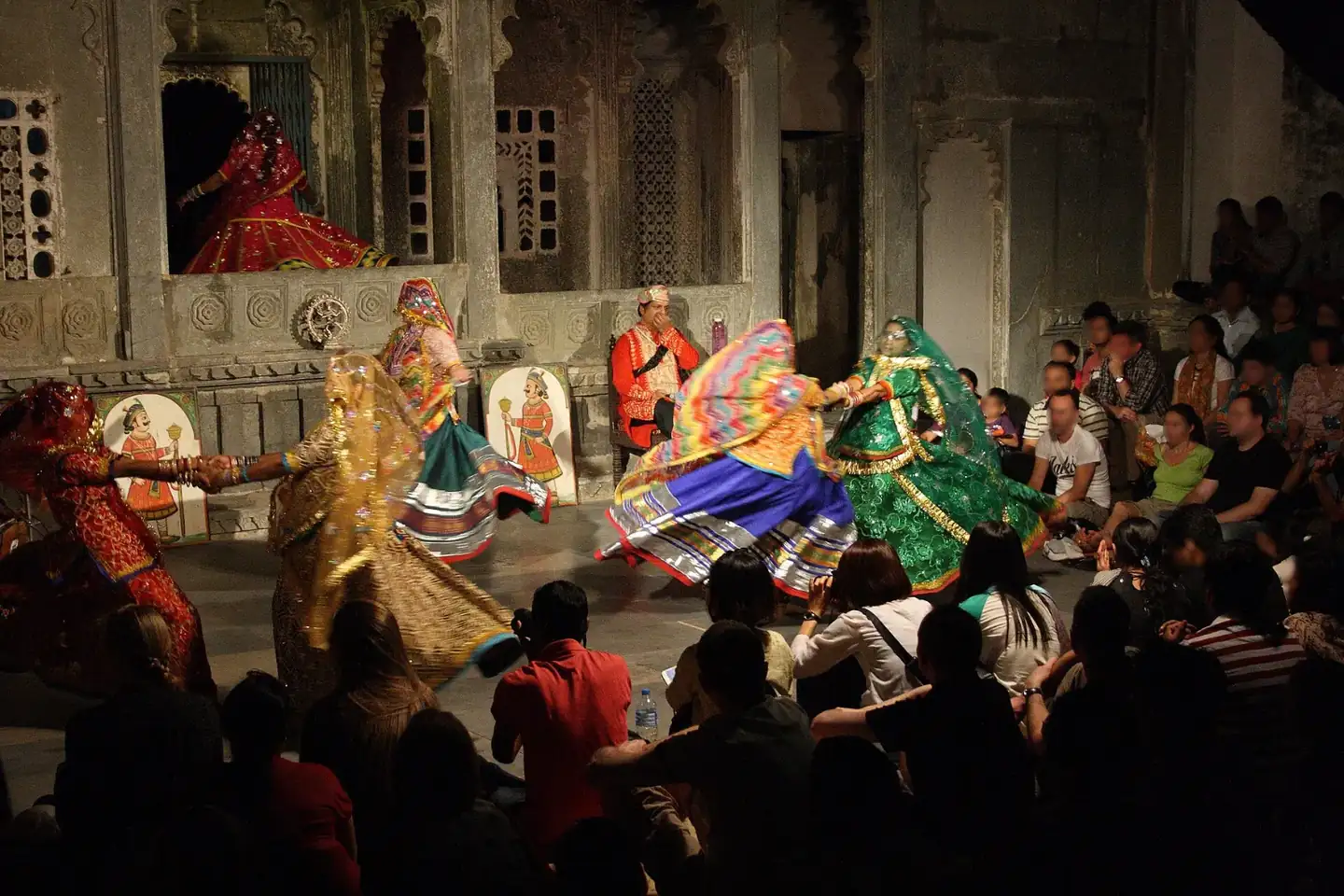
Chakri means wheel, and the dance is all about fast, continuous spinning. It belongs to the Kanjar community of the Kota and Bundi area and is performed mostly by women at weddings and celebrations. Their wide, heavy skirts flare out into circles as they turn to the quickening beat of the dholak.
Chari
Chari is danced by Gujjar women around Kishangarh at festivals, weddings and family celebrations. It draws on the daily task of fetching water: each dancer carries a brass pot on her head with a lit lamp inside, and the flickering flames make it especially striking after dark.
Drum and fire dances
In the Jalore area, near Mount Abu, men perform a vigorous drum dance at weddings, with large drums hung from their necks and steps that follow the rhythm they beat out. The fire dance is even more intense. Seen mainly during Holi and Janmashtami, it has dancers swinging burning rods and, in some traditions, walking across hot coals.
Where to see them
The best chance to see these dances in their own setting is at a village wedding or a regional fair. Travellers can also catch them at evening cultural shows in Udaipur, Jaipur and Jaisalmer, and at desert camps around Jaisalmer. When we plan a Rajasthan tour, we can include an evening programme so you see at least a few of these forms live.
Also nearby
Plan it with us
Tell us your dates and who is travelling. We will build the route, book the car, driver and hotels, and send you a clear quote.