- Origin
- Kakatiya period, Telangana
- Performers
- Traditionally men; Perini Lasyam for women
- Revived by
- Dr Nataraja Ramakrishna
- Where to see
- Warangal and Hyderabad cultural events
History
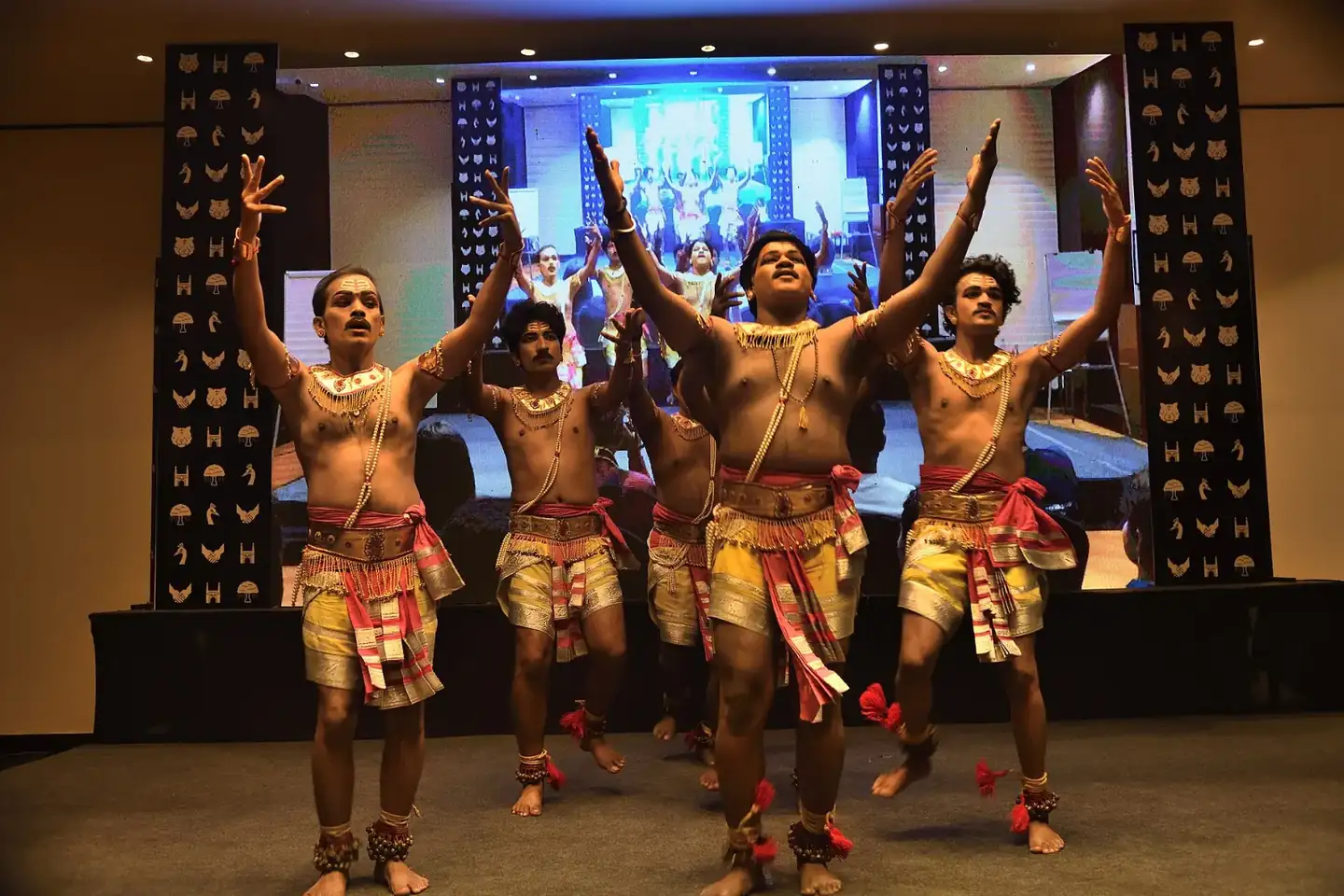
The Kakatiya rulers were devoted Shaivas, and Perini was performed in their palaces and temples to lift the spirits of soldiers. Many of the dancers belonged to the Veerashaiva tradition. Sculptures of dancers on the walls of the Ramappa Temple near Warangal preserve its poses and have been studied closely by scholars of the form.
Decline and revival
After the fall of the Kakatiya kingdom the dance lost its royal patrons and faded almost completely, surviving only in fragments of temple sculpture and literature. It was rebuilt in the 20th century by Padma Shri Dr Nataraja Ramakrishna, a scholar of dance and temple traditions, who drew on the Ramappa sculptures and old texts. He set up a Perini training centre in Warangal, and many dancers have since learned the form there.
How it is performed
Dancers wear dhotis with ornaments at the neck, wrists and ankles, including ankle bells. The movements are quick, forceful and often acrobatic, kept in step with drums, conches, bells and rapid spoken rhythm syllables called jathis. A female version, Perini Lasyam, blends grace with the same energy. The Telangana government has named Perini the state dance, and it is showcased at the yearly GoHeritage Warangal Run.
- Performers: traditionally men
- Music: drums, conches, bells and jathis
- Female form: Perini Lasyam
Where to see it
Performances are most likely at cultural festivals and heritage events in Warangal and Hyderabad, and sometimes at temple celebrations. If you are visiting the Kakatiya sites, ask locally about upcoming shows. We can plan a Warangal heritage trip covering Ramappa, the Thousand Pillar Temple and Warangal Fort.
Also nearby
Plan it with us
Tell us your dates and who is travelling. We will build the route, book the car, driver and hotels, and send you a clear quote.