- Built
- c. 1121–1160 CE
- Best time
- November to March
- Distance from Bengaluru
- About 210 km
- Dress code
- Modest clothing, shoulders and knees covered
- Festivals
- Maha Shivaratri, Hoysala Mahotsava
History
Work on the temple began around 1121 CE during the reign of Vishnuvardhana, and it was largely finished by about 1160 CE. It is often said to have been built in a spirit of rivalry with the Chennakeshava temple at Belur, which was going up at the same time. In the fourteenth century, armies of the Delhi Sultanate raided Halebidu twice, and the city lost its status as a capital, but the temple survived.
What to see
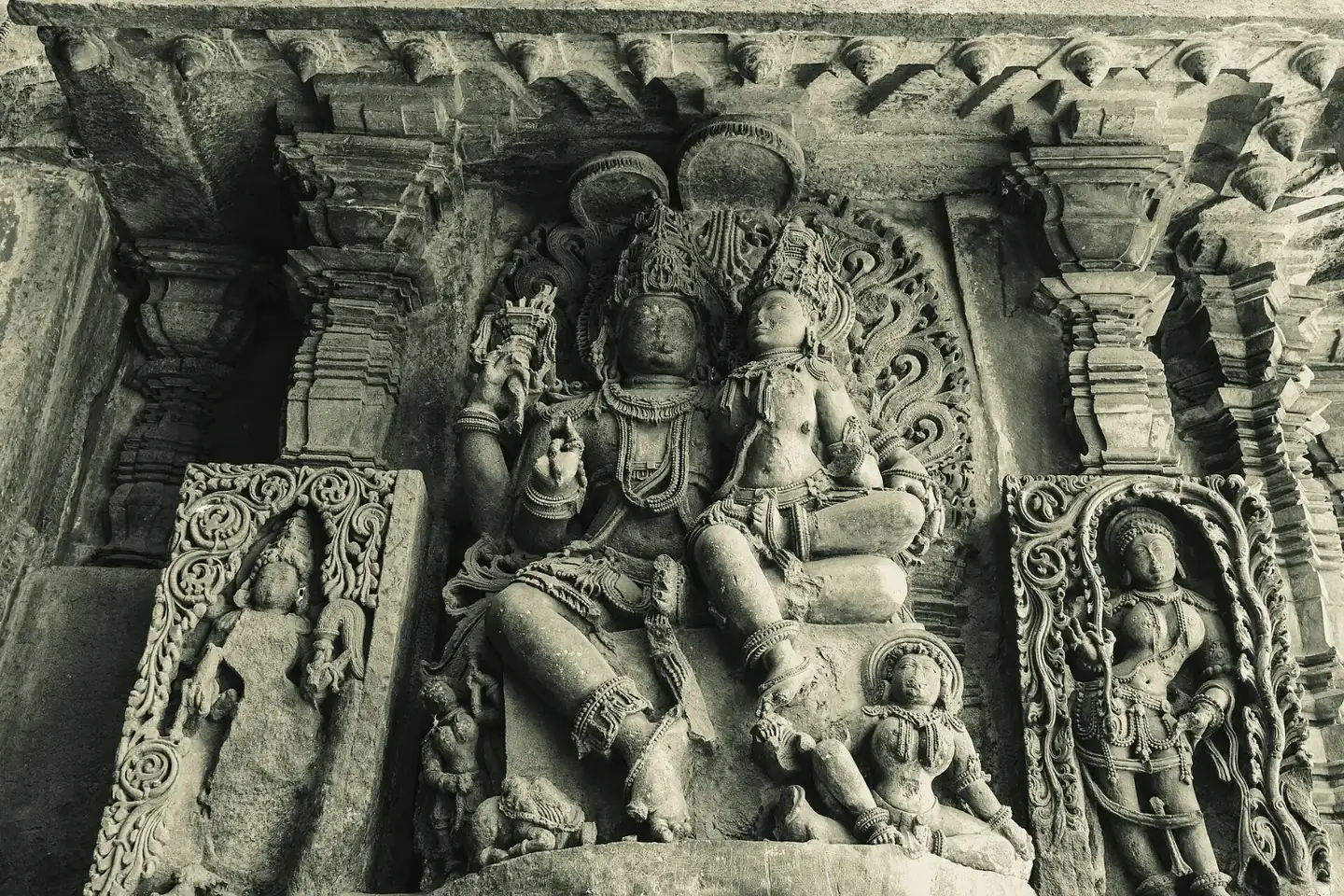
The temple is a pair of shrines side by side, each with a star-shaped plan, built on a raised terrace of soapstone. The outer walls carry horizontal bands of elephants, lions, horsemen, scrolls and mythical beasts, topped by panels showing scenes from the Ramayana, Mahabharata and Bhagavata. Look for the large figures of gods and goddesses, the lathe-turned pillars inside, and the two big Nandi statues in the pavilions facing the shrines.
The Archaeological Survey of India maintains a small museum on the grounds with sculptures collected from the area.
Visiting information
The temple is open every day. November to March is the best period, when mornings and afternoons are pleasant for walking around the outside. Maha Shivaratri and the Hoysala Mahotsava cultural festival are the main events here. Visitors should dress modestly, with shoulders and knees covered; traditional clothes are welcome.
How to reach
Halebidu is roughly 210 km from Bengaluru, about four hours by road. Bengaluru's airport is the most practical for most travellers. Hassan, around 30 km away, is the nearest large railway station. Belur is 16 km from Halebidu, so the two are easily covered in one day by car.
Also nearby
Plan it with us
Tell us your dates and who is travelling. We will build the route, book the car, driver and hotels, and send you a clear quote.