- Origin
- Kerala
- Style
- Solo, performed by women
- Music
- Carnatic; songs in Manipravalam
- Where to see
- Temple festivals and cultural evenings in Puducherry
What the dance expresses
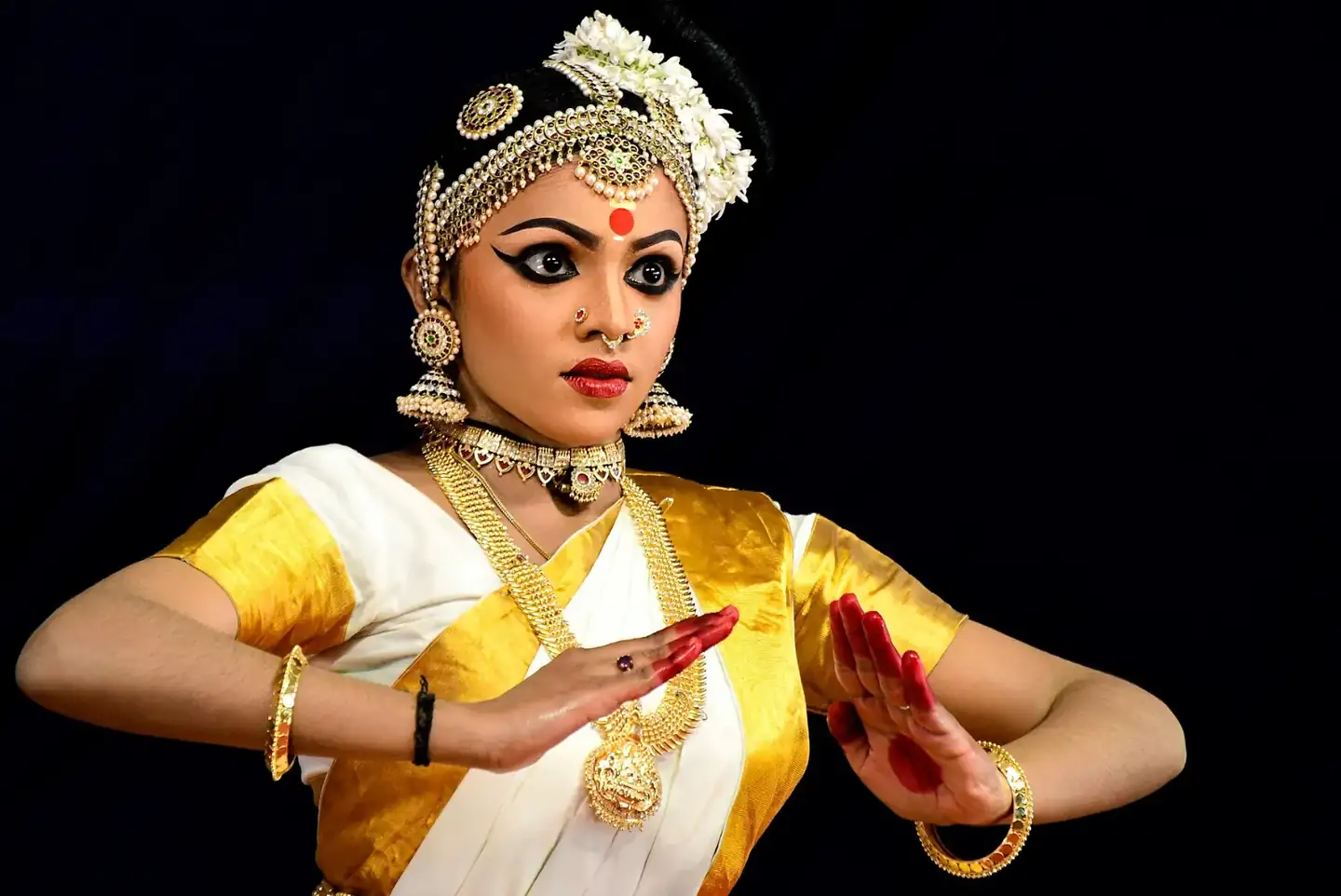
Mohiniyattam belongs to the lasya style of dance: graceful, feminine and flowing, rather than vigorous. The performer uses light footwork, delicate hand gestures and subtle facial expressions to convey shringara, the mood of love, often in the form of devotion to Vishnu or Krishna. Stories come from the Puranas and the epics, and the dancer takes on the role of Mohini herself.
Music
Songs are usually composed in Manipravalam, a mix of Malayalam and Sanskrit, and set to Carnatic music. A vocalist leads, with the mridangam and violin among the accompanying instruments. The pace is often slow, giving the dancer room to linger on each expression.
Costume and look
The costume is simple and elegant: a cream or ivory kasavu sari edged in gold, in the style of traditional Kerala dress. Make-up is natural, jewellery is light, and the hair is gathered into a bun worn to one side and often ringed with jasmine. Every movement is measured, and the overall effect is calm and meditative.
Where to see it in Puducherry
Puducherry, with its mix of Tamil and French influences, hosts many classical dance programmes. Mohiniyattam recitals take place at temple festivals, heritage events and cultural evenings organised by local institutions. Ask your hotel or check local listings for upcoming performances during your stay, especially in the cooler months from October to March, when the cultural calendar is busiest. An evening recital fits easily after a day of sightseeing in the French Quarter, and watching the dancer's expressions up close is the best way to appreciate the form. We can help you plan a Puducherry stay around a festival or performance.
Also nearby
Plan it with us
Tell us your dates and who is travelling. We will build the route, book the car, driver and hotels, and send you a clear quote.